.svg)



(or, how I became the algorithm's favorite basic bro)
It started, as most identity crises do, with a phone in one hand and a caffeine deficit in the other.
One bleary Tuesday morning, I typed "coffee near me Los Angeles" into my search bar.
Seconds later, I was staring at a grid of identical cafés—each promising "good vibes," latte art, and a playlist that whispered, you are special, in lowercase Helvetica.
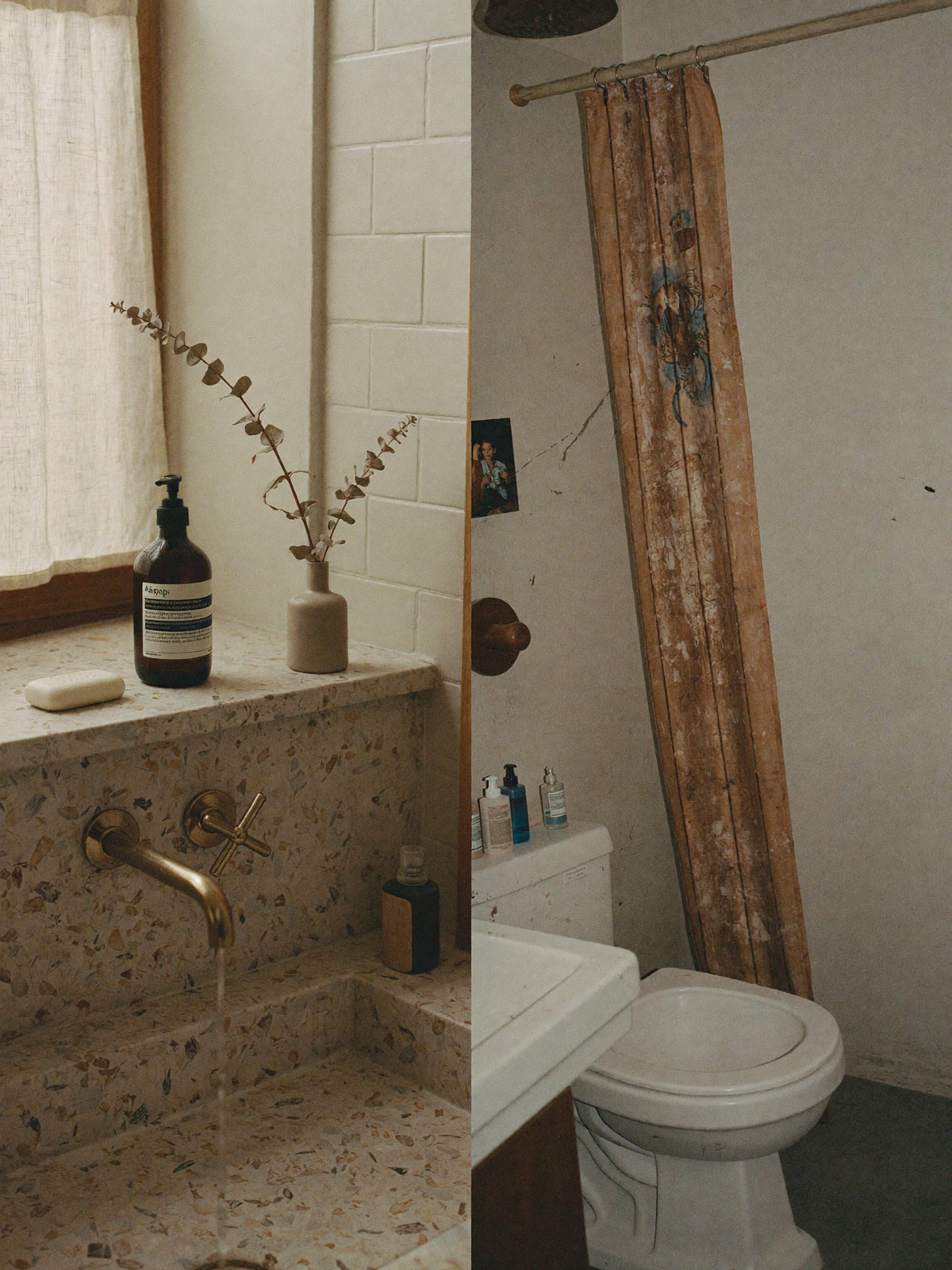
All of them had the same minimalist interiors: white walls, pale wood, plants named after Scandinavian nouns. None hinted at any real neighborhood or story—just the clean, beige efficiency of algorithm-approved design.
I realized something unsettling: my phone wasn't just helping me find coffee. It was quietly profiling me.
The Existential Crisis of a Coffee Search
You know that sinking feeling when you scroll through endless "best coffee near me" lists, only to find every café looks like the same Pinterest board?
That was me, staring into the void of oat milk sameness.
The more I searched, the more I realized I wasn't choosing coffee; my algorithm was choosing it for me.
The kind with mismatched chairs, handwritten menus, and someone's cousin playing jazz too loud in the corner?
It knew I liked neutral ceramics, ambient playlists, and overpriced pastries described as "seasonal." It had built a mirror version of me—neat, polite, and slightly tragic.
Maybe I hadn't discovered taste. Maybe I'd just subscribed to it.
When "Local Coffee Shops" Stop Feeling Local
Remember when local coffee shops actually felt, well, local?
The kind with mismatched chairs, handwritten menus, and someone's cousin playing jazz too loud in the corner?
Now, search "local coffee shops near me" in Los Angeles and you'll find yourself in a perfectly air-conditioned déjà vu. Each café feels algorithmically cloned: the same distressed wood, the same Edison bulbs, the same mural of a sad tiger in a turtleneck.
We've mistaken style for sincerity.
The "craft coffee bro" isn't chasing unique flavor anymore—he's chasing the comfort of curated individuality. The rebellion has become uniform.
Escaping the Coffee Algorithm
There's still hope for us, fellow caffeine existentialists.
If you scroll past the top results—the ones with SEO teams and $8 cortados—you'll find something real.
Los Angeles still hides its gems:
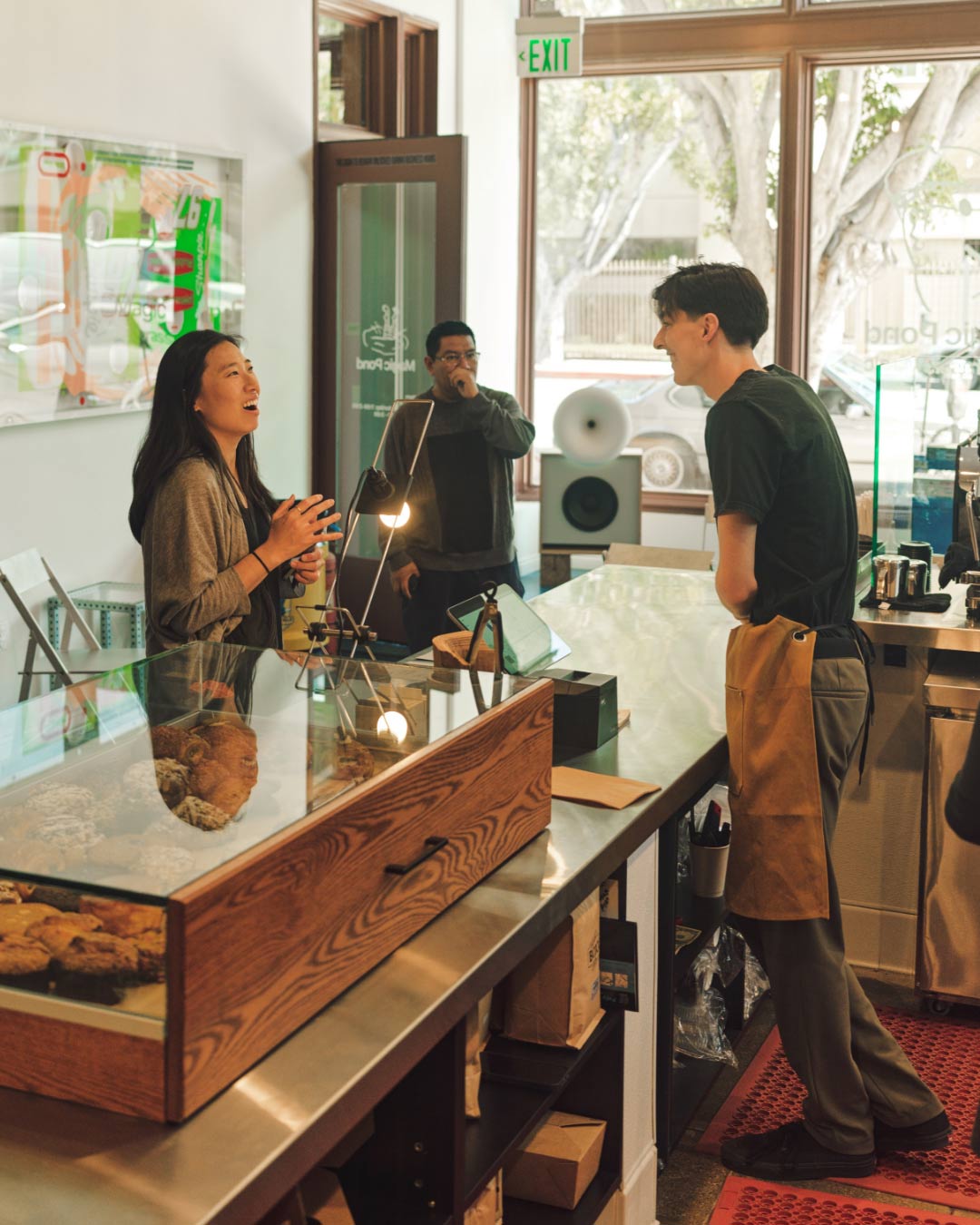
- Jurassic Magic in Mid-City, where espresso meets jazz and the baristas actually look you in the eye.Convi, tucked away on Mansfield, a local coffee spot that feels more like your friend's kitchen than a concept store.And the tiny, stubborn cafés that don't optimize for search—just flavor.
Skip the beige temples. Follow the sound of a grinder that's slightly too loud and the smell of real beans in motion.
The New Local: Finding Real Coffee in Los Angeles
Maybe the algorithm isn't evil—it's just bored.
It gives us what we keep clicking on: sameness, safety, beige serenity. But "coffee near me" doesn't have to lead to the same latte loop.
The next time you search for "unique coffee shops Los Angeles", close Maps and just walk. Wander until you find the place that doesn't match your feed. The one where the milk steams unevenly, the counter is chipped, and someone's playing a playlist that makes no sense.
That's real coffee.
That's local.
Quick FAQ for the Curious (and the Caffeinated)
Q: What are the best coffee shops near me in Los Angeles that actually feel local?
A: Try smaller neighborhood cafés like Jurassic Magic in Mid-City or Convi near MacArthur Park—independent, soulful, and algorithm-resistant.
Q: Why do all coffee shops look the same now?
A: Because aesthetics sell faster than espresso. The minimalist trend took over social media—and now your algorithm thinks beige equals "authentic."
Q: How do I find unique coffee in LA?
A: Ignore the top search results. Explore your neighborhood on foot, or check out community-based markets and creative cafés that aren't designed for Instagram first.
Final Sip
Maybe the point isn't to escape the algorithm—it's to outsmart it.
To find coffee that feels human again. To choose something messy, loud, and full of character.
So the next time your phone whispers "coffee near me," listen politely—then go somewhere it never expected you to.
Seconds later, I was staring at a grid of identical cafés—each promising "good vibes," latte art, and a playlist that whispered, you are special , in lowercase Helvetica.
Jurassic Magic
Specialty coffee, community, and stories. Mid-City & MacArthur Park, Los Angeles.
Find a Location