
Best Espresso Beans for the Linea Mini
(And Why Your Machine Isn't the Problem)
You spent five thousand dollars on a machine that was built to last forever. The beans you're putting in it deserve the same respect.
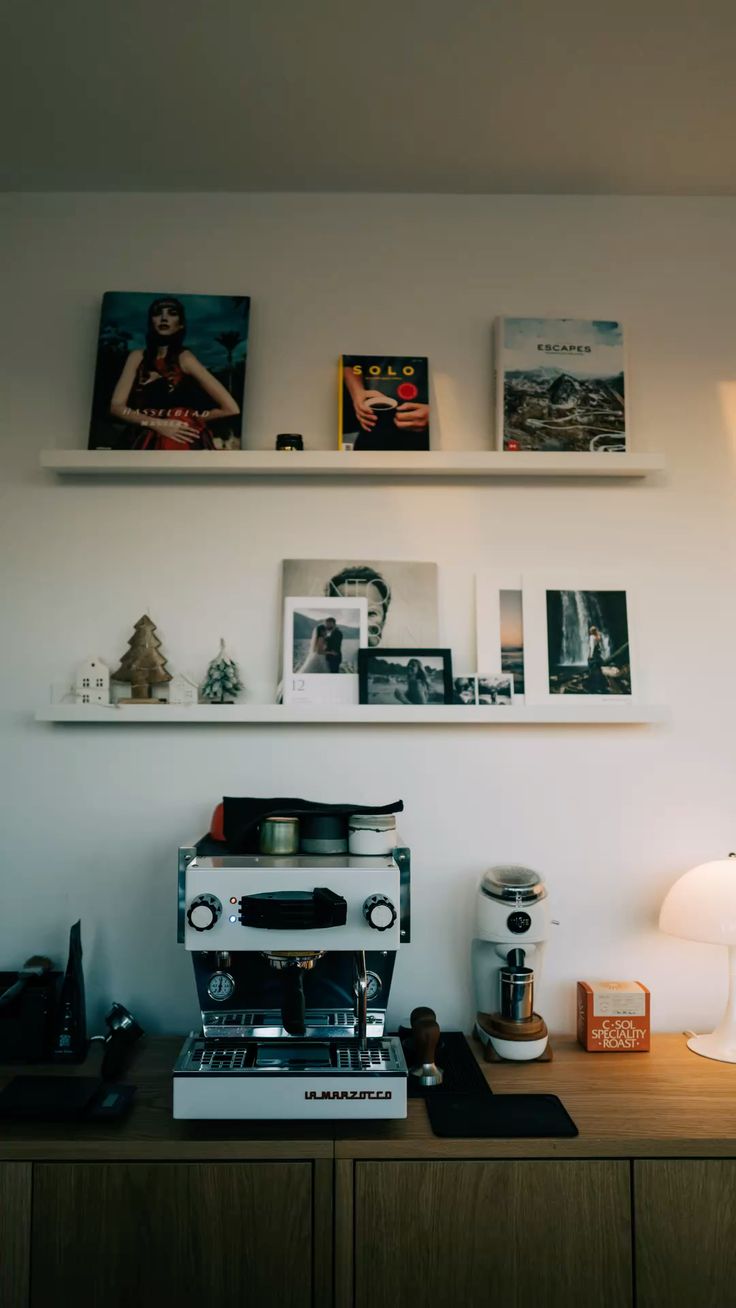
There's a particular kind of despair that sets in around day three of owning a La Marzocco Linea Mini. You've watched every YouTube video. You've read the r/espresso threads so many times you could recite them. You've spent forty minutes on a single shot. And what came out tasted — if you're being honest — like something that would get bad reviews on Yelp.
Here's what nobody tells you: the machine isn't the bottleneck. It never was. The Linea Mini is, by almost any reasonable measure, the most capable piece of equipment you will ever put on a home kitchen counter. Temperature stability, pressure consistency, build quality that will outlive you — it's not the machine. It's the beans. And the grinder. And the beans again.
We run coffee shops in MacArthur Park and Mid-City. We have pulled more shots on more equipment than we can count. And we have watched brilliant, intelligent people — people who can talk for an hour about water recipes — consistently buy mediocre beans and then spend hours trying to dial their way out of a problem that started at the roastery. This piece is an attempt to save you from that particular hell.
1. Why the Beans Matter More Than the Machine
The espresso extraction process is, at its core, a chemistry experiment. Hot water, under pressure, passes through a compressed bed of ground coffee and pulls out hundreds of chemical compounds in a specific sequence: first the acids, then the sugars, then the bitter compounds. A machine like the Linea Mini controls the conditions of that experiment with extraordinary precision. What it cannot do is make good coffee out of bad beans.
Think of it this way: a Hasselblad camera in the hands of someone photographing a parking lot produces a photograph of a parking lot. The precision of the instrument is irrelevant if the raw material has nothing to offer. The Linea Mini will, with mechanical perfection, extract exactly what is in your beans — the good and the bad and the mediocre. The better the beans, the more the machine has to work with.
Most home baristas upgrading to a Linea Mini are running beans that belong in a drip machine. The machine is now capable of surfacing every flaw in those beans at the highest possible resolution. This is not a machine problem. This is a sourcing problem.
The Linea Mini demographic — and if you're reading this, you are probably in it — tends to spend enormous amounts of mental energy on variables. Pressure profiles. Pre-infusion. Temperature offsets. WDT techniques. All of this matters. None of it matters as much as starting with exceptional raw material.
2. What to Actually Look For in Espresso Beans
Origin matters. Start there.
Ethiopia produces beans that, under the right conditions, taste like jasmine and bergamot and ripe citrus. Kenya produces a different kind of brightness — black currant, tomato acidity, that particular high-wire act of flavor that coffee people call "juicy." Colombia produces a more balanced, approachable cup: caramel sweetness, mild citrus, crowd-pleasing in the best sense.
For a Linea Mini, we tend to reach for East African single origins — particularly washed Ethiopians and Kenyan AAs. They're expressive. They reward the temperature stability the machine offers. But this is a bias based on palate. You should develop your own.
Buy from roasters who publish roast dates.
This is non-negotiable. If a bag shows a "best by" date but no roast date, the roaster is hiding something. A roast date is the roaster saying: we are accountable to freshness. It is the minimum viable signal of quality. Anything else is a red flag dressed up in nice packaging.
Pay attention to the processing method.
Washed coffees are stripped of their fruit layer before drying, producing clean, clear flavor profiles. Natural processed coffees dry with the fruit still attached, producing intense, sometimes wild flavors: blueberry, wine, tropical fruit. For espresso, start with washed. Develop an opinion. Then go exploring.
3. Roast Levels, Demystified
The coffee world has developed an almost pathological relationship with light roast. Let's be honest about what roast level actually means and what the Linea Mini can and can't do with each.
The Old Guard
Forgiving. Consistent. Produces the classic espresso flavor: bittersweet, chocolatey, low acidity. The Linea Mini is comically overpowered for this application.
The Sweet Spot
Balanced. Some origin character preserved. The most practical starting point for a new Linea Mini owner who wants good shots without an advanced degree in extraction chemistry.
What the Machine Was Built For
Expressive. Complex. Unforgiving. When it works on a temperature-stable machine like the Linea Mini, it tastes like nothing else in the world.
Not a Sin
A well-constructed espresso blend is a work of craft. Some of the best shots we've ever pulled have been from thoughtfully designed blends.
"Light roast espresso will show you every flaw in your technique and every virtue in your beans simultaneously."
Jurassic Magic, MacArthur Park4. The Freshness Problem (It's Worse Than You Think)
Coffee is a perishable product. The volatile aromatic compounds that make a coffee smell extraordinary begin dissipating the moment the beans are roasted. Most of what is sold in grocery stores has already passed its peak.
For espresso, too fresh is also a problem. Beans roasted less than five days ago are still degassing CO2. When you force hot water through them, the CO2 creates channeling — extraction becomes uneven, and your shot tastes sour and unpredictable regardless of what you adjust.
The Freshness Window for Espresso
Buy small. Buy often. Find a roaster who ships fresh with a roast date on the bag.
5. How to Dial In on a Linea Mini: The Real Guide
The dialing-in process requires patience, a scale, and a willingness to change one thing at a time. That's it.
Start here: the baseline recipe
Dose: 18 grams. Target yield: 36 grams. Time: 25 to 30 seconds. Temperature: 93°C. Pressure: 9 bar. This is your starting point, not your destination.
| What You're Tasting | What's Happening | What to Change |
|---|---|---|
| Sour, sharp, thin | Under-extraction | Grind finer. Or increase dose by 0.5g. |
| Bitter, dry, hollow | Over-extraction | Grind coarser. Or reduce temperature. |
| Sour AND bitter | Channeling | Use a WDT tool. Check your tamp pressure. |
| Weak, watery | Ratio too long | Stop the shot earlier. |
| Flat, no brightness | Temp too low or stale beans | Increase temperature 1°C. Or get fresher beans. |
If you own a Linea Mini and are still using a blade grinder or an entry-level burr grinder, please stop reading and go buy a quality grinder. The Linea Mini is held back more by a poor grinder than by almost any other variable.
6. The Beans We'd Put in a Linea Mini
For the newcomer
Start with a medium roast from a quality roaster who ships to your door and prints roast dates. Colombian or Brazilian single origins make a forgiving starting point — sweet, balanced, won't punish you during the learning curve.
For the developing palate
Move to a washed Ethiopian or Kenyan single origin. Light-medium roast. This is where the machine starts to show you what it can do. Floral aromatics, citrus brightness, that clean finish.
For the advanced practitioner
Natural processed coffees. Anaerobic fermentation. These require real skill to extract at their best — and when they work on a temperature-stable machine like the Linea Mini, they produce shots that genuinely have no comparison.
Whatever you're pulling, we make our current offerings available for order online — roasted to order, shipped within 48 hours, with the roast date on the bag.
Coffee that was actually roasted this week
Roasted to order. Shipped within 48 hours. Roast date on every bag. Because your Linea Mini deserves better than a warehouse.
Shop Our Current CoffeesFrequently Asked Questions
What are the best espresso beans for a La Marzocco Linea Mini?
Light to medium roast single origin beans — particularly washed Ethiopians and Kenyan AAs — tend to perform beautifully on the Linea Mini. Start with something from a roaster who publishes roast dates. Freshness is non-negotiable: 7–21 days off roast is your window.
How do I dial in espresso on a Linea Mini?
Start with a 1:2 ratio (18g in, 36g out) at 9 bars, 93°C, targeting 25–30 seconds. Change one variable at a time. Most problems that can't be solved with grind are puck preparation issues: channeling from uneven distribution or inconsistent tamping.
Can I use light roast beans in a Linea Mini?
Absolutely — the Linea Mini's temperature stability handles light roasts beautifully. They preserve the origin character of the bean: florals, citrus, the fermented fruit notes dark roasting destroys. You'll experiment more than with medium roast, but the shots are genuinely extraordinary.
How fresh should espresso beans be?
7–21 days post-roast is your espresso window. Too fresh and CO2 off-gassing makes extraction chaotic. Too old and the volatile aromatics are gone. Quality specialty roasters print the roast date on the bag — if a bag shows only a "best by" date, that's a signal.
What's the difference between espresso beans and regular coffee beans?
Technically, nothing. "Espresso beans" is a marketing category, not a botanical designation. Any coffee can be pulled as espresso. Single origin light roasts, pulled with care on a machine like the Linea Mini, will produce more interesting, complex espresso than most espresso-labeled blends.