Why Coffee Shops Keep Repeating Themselves
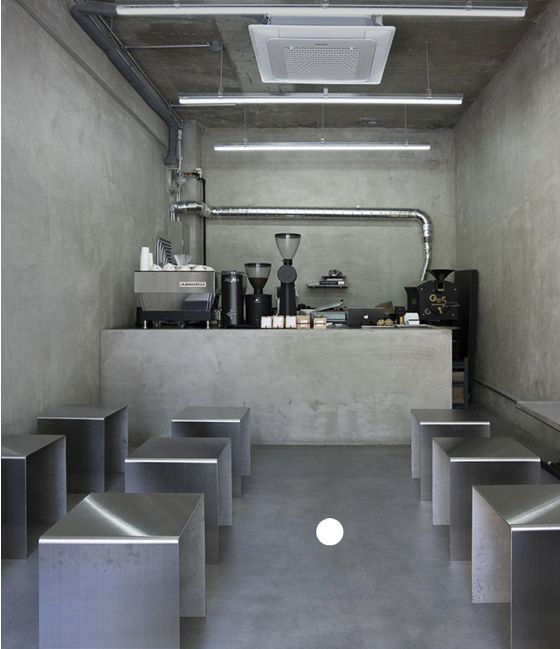
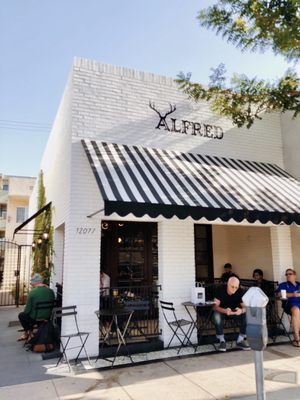
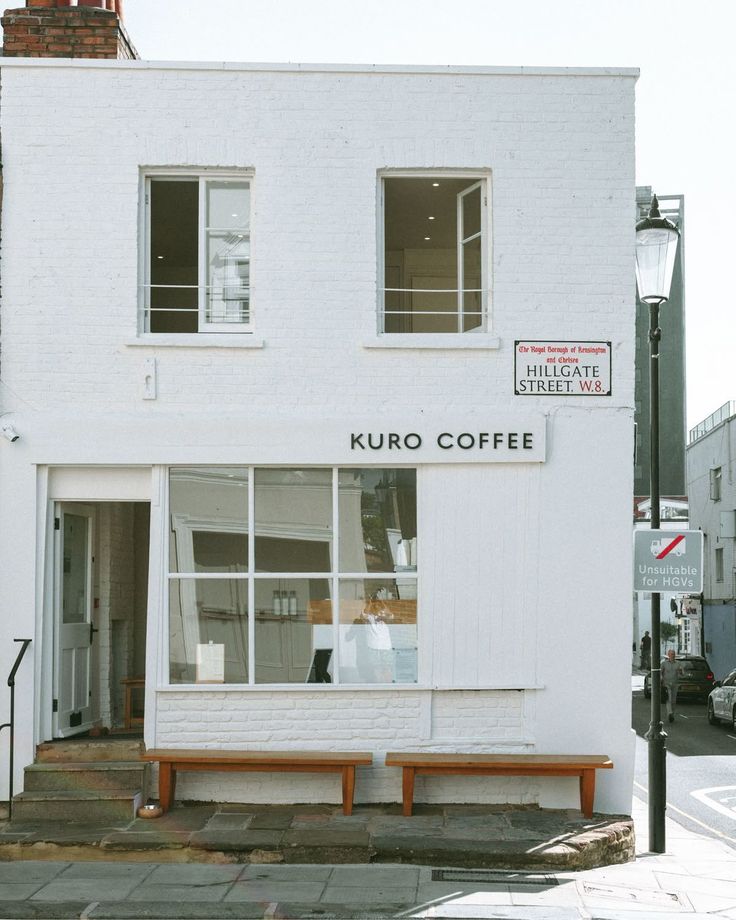
Walk into a new café in almost any neighborhood and there is a strong chance you already know what it looks like. Pale oak. Matte black fixtures. A white wall that reads as “clean” in photos. A single leafy plant positioned like a punctuation mark. A menu written in confident minimal type. The milk choices are arranged like moral categories. The music is soft enough to disappear, which is the point.
This is not a complaint about beauty. Many of these spaces are pleasant, functional, and well-lit in ways older cafés often were not. The question is stranger and more cultural than aesthetic: why do coffee shops keep repeating themselves—and why does the repetition feel so inevitable?
If you want a short answer, it is this: coffee shops are no longer designed primarily as places to drink coffee. They are designed as places to be seen drinking coffee—by other people, by your phone, and by the algorithmic world that decides which businesses get discovered and which do not.
1) The café became a user interface
The modern café is built like software. The most successful designs reduce friction, standardize choices, and create predictable outcomes.
- The line moves like an app flow. Enter, queue, order, pay, wait, pickup.
- The menu reads like a settings screen. Add-ons, modifiers, swaps, “make it iced,” “oat milk,” “extra shot.”
- The room is laid out like a dashboard. A few communal seats for the vibe, a few two-tops for dates, bar seating for solo workers, and the sacred back corner for people who arrived early enough to claim it.
This is not accidental. It is a response to scale. When coffee culture was more local, variance was part of the charm. When cafés became brands competing across neighborhoods and cities, variance became risk. Uniformity became a feature: customers do not want surprises, they want the same experience with a different street name outside.
2) Instagram did not invent the aesthetic, but it weaponized it
Minimalism existed long before social media. What changed is that minimalism became measurable.
Photogenic interiors do not just look nice; they produce marketing. Every customer can become a distribution channel—if the space is camera-friendly. This pushes design in a specific direction:
- Neutral palettes photograph consistently across different phones and lighting conditions.
- High contrast surfaces help drinks and faces pop.
- Open sightlines make it easier to capture “the moment.”
- Repeating textures (tile, wood slats, plaster) read as “designed” without demanding attention.
The café becomes a set. The drink becomes a prop. The customer becomes the subject. The brand becomes the backdrop. And because everyone is optimizing for the same metrics—shares, saves, tags—the outputs begin to converge.
3) The algorithm rewards recognizability over originality
Search engines, maps, and recommendation feeds behave like an invisible city planner. They shape what survives.
“Best coffee near me” is less a question than an instruction: be legible.
To be legible, you need cues that signal “this is a good café” instantly:
- clean lines
- tasteful restraint
- specialty language
- a barista-centric counter
- a modern pastry case
- a predictable drink lineup
A café that looks too different may be beloved by a small group, but discoverability favors the familiar. People decide in seconds whether a place matches their expectation. Platforms amplify what produces quick positive decisions. The result is design monoculture—not because designers are uncreative, but because the system punishes experiments that confuse the average scroll.
4) Supply chains and contractor culture make sameness efficient
There is also a practical reason cafés repeat: it is easier to build what everyone has already built.
Designers, contractors, equipment suppliers, and café consultants circulate through the same playbook. Certain materials are popular because they are available, affordable, and dependable:
- sealed concrete floors (durable, easy to clean)
- white tile (cheap, bright, familiar)
- black metal (industrial chic, hides wear)
- oak or birch (warmth without drama)
The repetition is not only aesthetic; it is operational. A café is a high-stakes machine: plumbing, drainage, HVAC, electrical loads, workflow, health codes, delivery paths. Proven layouts reduce failure. Failure is expensive. When the margin is thin, originality is often the first thing to be negotiated away.
5) “Third place” became “workplace,” and workplaces converge
A classic café fantasy is the third place: not home, not work, but something social and in-between. Modern reality is that many cafés function as lightly supervised coworking.
When customers stay longer, the space needs:
- stable Wi-Fi
- outlets
- chairs you can endure for 90 minutes
- lighting that does not exhaust you
- background sound that does not demand attention
- a general vibe that feels “productive”
Productivity aesthetics converge. You can see it across offices, hotels, and apartments staged for rent: a calm palette, clean surfaces, softened edges. The café repeats because the modern customer’s needs repeat.
6) The oat-milk era has a look
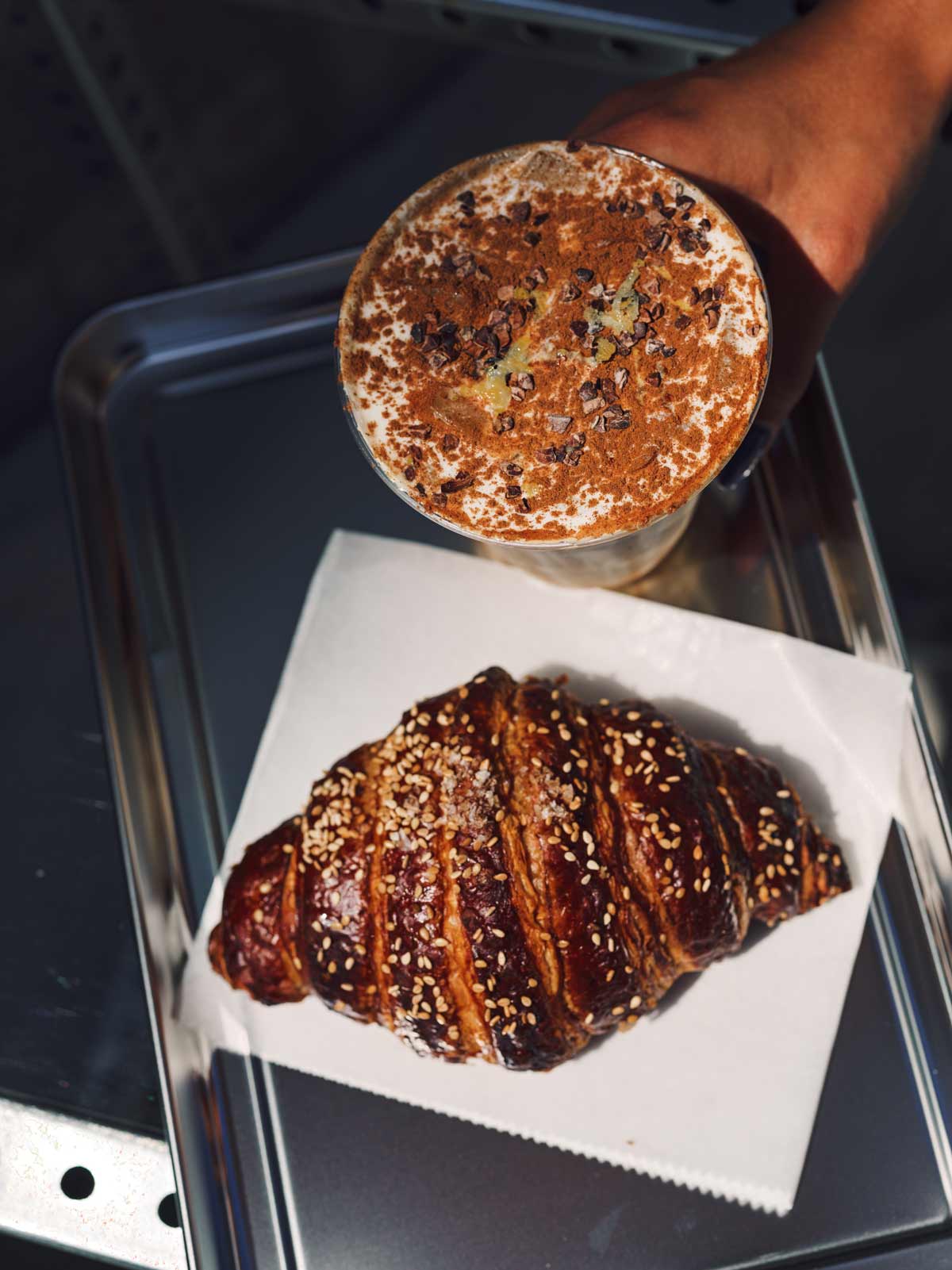
The drink menu has an aesthetic gravity of its own. The rise of oat milk, matcha, cold foam, and espresso-tonic culture moved coffee into a world of taste as identity.
The flavors are not the only thing being consumed. The customer is buying:
- health-adjacent indulgence
- curated adulthood
- an edited version of self-care
- a lifestyle that suggests taste without shouting it
The aesthetic that matches this is restrained, clean, and “elevated.” It avoids the messiness of older café cultures because it is trying to signal control: clean habits, clean ingredients, clean design.
7) Cities create clones without anyone agreeing to it
There is a deeper urban pattern here. Many neighborhoods now undergo the same evolution:
- A few original cafés appear, rooted in local taste.
- They succeed and become reference points.
- Rents rise; independent risk becomes harder.
- New cafés open that mimic what already proved profitable.
- The neighborhood becomes a collage of the same signals.
This is not an individual café’s fault. It is a cultural feedback loop: once a “successful café” has a recognizable look, that look becomes the safe bet for every new lease.
8) So what do we actually lose?
The loss is not “quirk” for its own sake. The loss is local specificity—the sense that a café belongs to a street rather than to an internet mood board.
Older cafés often had flaws: bad lighting, awkward seating, inconsistent menus. But the flaws were part of a kind of authenticity we did not have to perform. They were not designed to be photographed. They were designed to exist.
When everything looks the same, we stop reading places as places. We read them as categories. The café becomes less like a room in a city and more like a brand asset that happens to have an address.
9) How to spot a café that is not just repeating the template
A café can be minimalist and still be specific. Sameness is not about a color palette; it is about lack of point of view.
Signs of a café with point of view:
- The menu reflects a real preference, not just a list of trends.
- The seating invites a particular kind of social behavior (not just “sit anywhere”).
- There is a reference to the neighborhood that is not decorative.
- The design has one or two decisions that feel slightly irrational—human, not optimized.
- The staff seems to shape the space, not just operate it.
Point of view is risky. But it is also what turns a café from “another nice place” into “my place.”
10) The future: either hyper-local or hyper-generic
Coffee culture is splitting. On one side: scalable, consistent, camera-ready cafés designed for discoverability and reliability. On the other: smaller spaces that lean into specificity—less perfect, more personal, sometimes harder to monetize.
The interesting question is not which side wins, but what we want cafés to be.
Do we want spaces that feel like everywhere because everywhere is comforting? Or do we want spaces that feel like somewhere, even if that means they will not photograph as cleanly?
Because behind the repetition is a quiet truth: the coffee shop aesthetic is not just a style. It is a survival strategy for businesses trying to exist inside a system that rewards sameness.
And yet, the moment you walk into a café that feels unmistakably itself, you remember what the repetition has been covering up: we do not just want caffeine. We want a place that feels real.