
For nearly a decade, the home office was the clearest signal of a certain kind of success. A desk by a window. Ergonomic chair. Three monitors positioned to suggest momentum and control. It was a room that promised freedom but delivered something quieter — obligation.
Somewhere between 2023 and 2026, people started asking what that room was actually for. And a strange thing began happening. The people who built rooms around output started building rooms around something else entirely. Not focus. Not productivity. Something slower. Something that doesn't produce anything at all.
A room that only does one thing is a luxury most people forgot they needed.
What happened in Pasadena
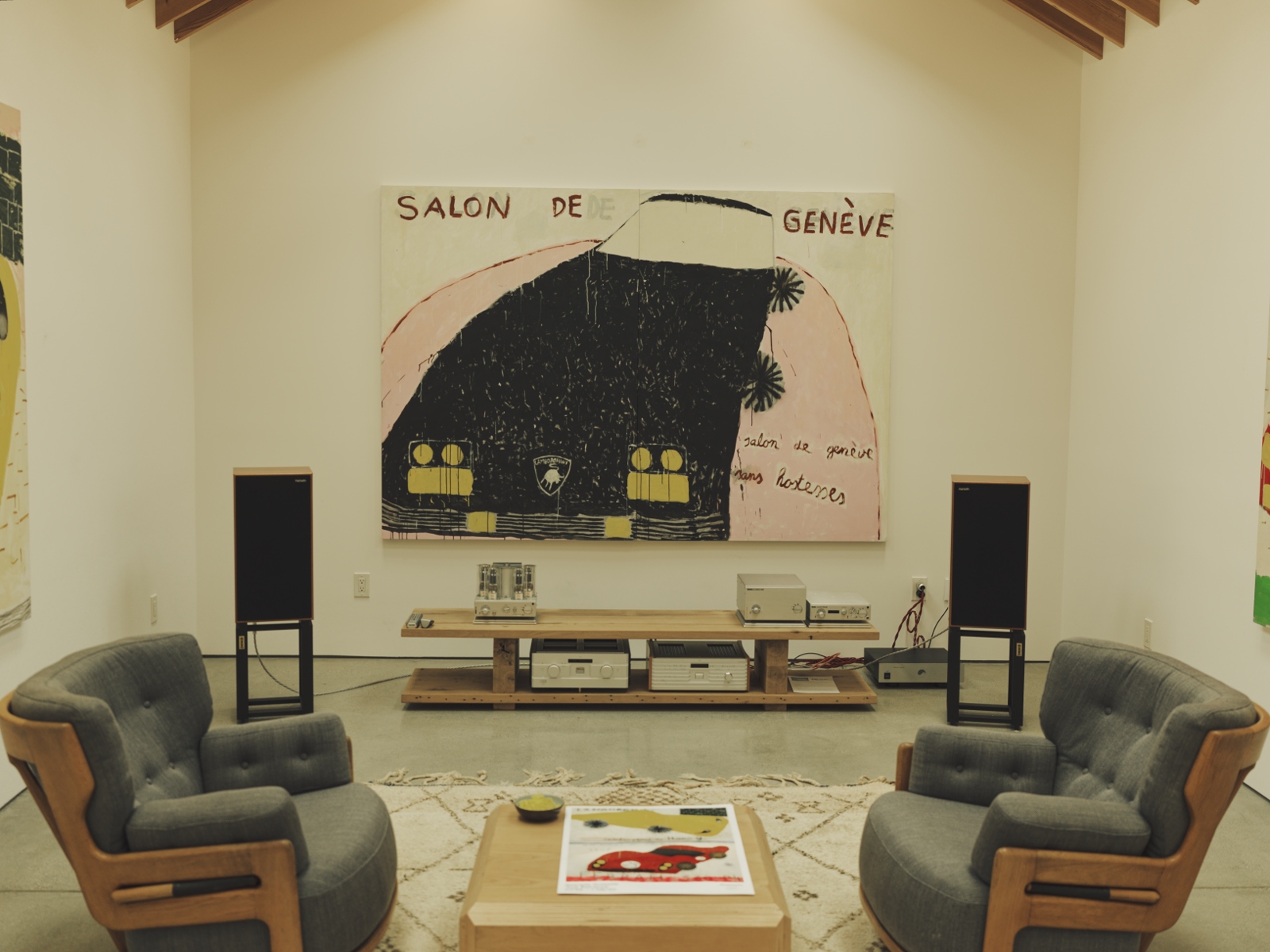
In the northwest corner of Pasadena, there is a listening room tucked into a studio with analog speakers and the kind of silence that feels almost architectural. You walk in, and there's nothing to optimize. No desk. No screens. No notebook waiting to be conquered.
There are speakers. A couch. Time that's allowed to pass without justification.
This room does not try to be efficient. It tries to be present.
Unlike the home office — which promised control and delivered guilt — a listening room offers something rarer. A boundary. A single purpose: remove distraction. No pings. No multitasking. No preview of tomorrow's crisis. Sound is not background texture but the main event. And silence, too, becomes part of the experience.
From efficiency to something gentler
The home office was built like a machine. Bright light. Clean lines. Furniture designed to disappear so work could take over. The listening room inverts all of this. It favors weight. Warmth. Dim light. Materials that absorb rather than reflect — bookshelves instead of acoustic panels, wood instead of plastic.
This is not minimalism. It's restraint.
And it mirrors something quietly happening in coffee culture too. The move away from speed. Away from optimization. Away from tools that promise more in less time. What's replacing them are rituals that take exactly as long as they need to.
Coffee tastes different in a room like this
In a listening room, coffee behaves differently than it does at your desk. It's not a stimulant. It's a companion. Brewed slowly. Consumed deliberately. Chosen not for brightness or clarity, but for depth — something heavier, something that settles in.
The ritual matters as much as the caffeine. Grinding by hand. Waiting. Letting heat do its work. These small acts mirror what the room is asking for: patience.
Coffee here isn't about getting through the morning. It's about staying with it.
The value of time nobody's counting
These rooms are appearing now because life has become aggressively full. Every space asks something from you. Every device competes for attention. Silence — once abundant — has become expensive.
The cost isn't measured in equipment. It's measured in the decision to leave time unclaimed. To sit with a record from beginning to end. To drink coffee without checking anything else. To be still long enough to notice what you already have.
That choice feels radical only because we've forgotten how normal it used to be.
What it really means
The home office was a symbol of ambition. The listening room is a symbol of refusal.
Refusal to optimize every minute. Refusal to perform productivity. Refusal to turn every interest into output. It suggests that there is value in experiences that don't scale, don't photograph well, and don't immediately explain themselves.
The listening room isn't a trend. It's a correction — a quiet insistence that some rooms exist not to make you better, faster, or richer. Some rooms exist to let you be still long enough to remember what you already have.
What is a listening room?
A dedicated space designed for intentional, focused experience of music and silence. Unlike a home office — which prioritizes productivity and connectivity — a listening room is optimized for attention, acoustic quality, and the removal of professional distractions.
Why are people building these instead of home offices?
As digital fatigue grows, many are seeking what they call "analog retreats." The shift from home office to listening room represents a cultural move away from constant output toward presence. It's a correction to the always-on nature of modern work.
How do you design one without spending five thousand dollars?
The essence of a listening room is restraint. Focus on comfortable seating, materials that absorb sound (bookshelves, wood), and dim lighting. The goal is a boundary-driven space where sound is the main event. The expensive part is permission to leave time unused — and that, you already have.
What does coffee have to do with this?
Both rituals emphasize patience over urgency. In a listening room, coffee is a companion rather than a stimulant — meant to be brewed slowly and enjoyed without screens or multitasking. It's the practice of being somewhere without producing anything.
The most radical thing you can do in 2026 is build a room — or find a room — that only does one thing: let you be present with something you actually want to pay attention to.
Jurassic Magic
Specialty coffee, community, and stories. Mid-City & MacArthur Park, Los Angeles.
Find a Location