The Rose Bowl Flea Market: Where LA Goes to Find What It Didn't Know It Lost
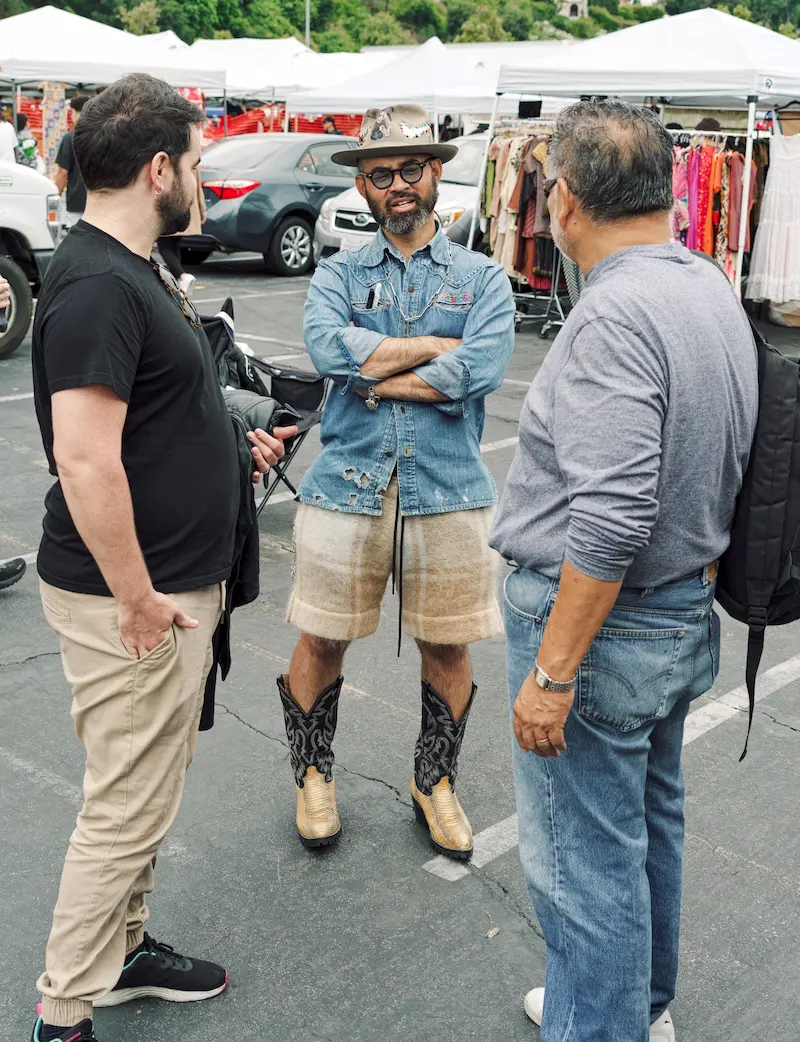
The Rose Bowl Flea Market is chaos dressed up as order. It's what happens when you take a parking lot in Pasadena and let 2,500 vendors spread out their entire lives across tables, blankets, and the hoods of cars.
I go there maybe twice a year. Each time I tell myself I'm just browsing.
I leave with a broken music box, a set of unmarked keys, someone's old postcards, and a sudden understanding of why I can't stop moving.
The Labyrinth
The Rose Bowl is a labyrinth, and like most labyrinths, you don't walk it to get somewhere. You walk it to get lost.
There are sections — Vintage. Collectibles. Clothes. Books. But the categories dissolve as you move. You'll find a 1960s bassinet next to a stack of cassettes. A taxidermied owl watching over a bin of broken alarm clocks. Someone's grandmother's silverware next to someone else's childhood toys.
It's not organized by logic. It's organized by letting go.
Every object here is a story someone didn't want anymore. What you find depends on what you need to hear.
What You're Actually Hunting For
People come to the Rose Bowl looking for "treasure." They use words like "rare" and "vintage" and "authentic." But that's not what's happening.
What's really happening is you're looking for permission to believe in meaning again. In the idea that objects carry time in them. That the life someone else lived can be worn like a jacket.
The coffee table book from 1975. The handwritten recipe cards. The jacket that smells like someone else's life. These aren't "treasures." They're shortcuts to feeling less alone.
The Economics of Wanting
A vintage Chanel bag costs $900. A vintage Chanel bag here might cost $150, if you know the right vendor.
But the real transaction isn't about price. It's about permission. About telling yourself you're not being wasteful, you're being thoughtful. You're not consuming, you're *rescuing*.
That story matters more than the cost. Maybe more than the bag.
What I Actually Came For
The Rose Bowl is a coffee person's museum, if you know where to look.
There are the vintage coffee grinders — beautiful machines from eras when things were built to last. Weighing three pounds. Precise. They meant business.
There are the pour-over cones from the 1950s. The old Mr. Coffee machines before they became disposable. Coffee cups from hotels that don't exist anymore, each one a small archive of a place and time.
I bought a ceramic pour-over cone last time. Made in Japan in the 1960s. The glaze is perfect. It costs nothing. It makes better coffee than machines that cost $600.
That's the real treasure at the Rose Bowl — the reminder that good design is patient. It waits for you to find it again.
The Real Reason You Go Back
The Rose Bowl doesn't sell things. It sells permission to become who you want to be.
For four hours, you're an archaeologist. You're a collector. You're someone with taste. You're someone who understands that what matters isn't new — it's *right*.
And then you go home and make coffee in a cup from 1963, and it tastes like you've been alive longer than you actually have.
That's the real flea market magic. Not the price. Not the rarity. Just the feeling that you've somehow gotten your hands on time itself, and it's still warm.
The Rose Bowl is where people let go of things — but it's also where you find permission to hold onto the parts of yourself you thought were lost. Every table is a chance to become the version of yourself you were meant to be.
Jurassic Magic
Specialty coffee, community, and stories. Mid-City & MacArthur Park, Los Angeles.
Find a Location